
Tyre Rotation in Bolton & Farnworth
If your front tyres always seem to wear out long before the rears, you’re not imagining it. On most cars, the tyres at each corner do very different jobs, so they wear at very different rates. Tyre rotation moves your tyres to new positions at regular intervals so all four wear evenly, giving you more miles from every set. Quick Fix Tyres offers tyre rotation across Bolton and Farnworth at your home, workplace or our Farnworth workshop, with a full tyre check included.
This page explains why tyres wear unevenly, which rotation pattern suits your car, how often to rotate and when rotation isn’t the right answer. To book, call 07761 491 673.
- check_circleHome, work or roadside
- check_circleFarnworth workshop, Mon–Sat 8–6
- check_circleNo hidden callout charges
What's Included in Our Tyre Rotation
Our tyre rotation isn’t just swapping wheels around. Every rotation includes a full check of all four tyres, so we can spot problems early and make sure the new positions are right for your car. Here’s what’s included:
| Included as standard | Why it matters |
|---|---|
| Tread depth check on all four tyres | Decides the best position for each tyre |
| Tyre condition inspection | Finds cuts, bulges, nails and uneven wear early |
| Correct rotation pattern for your car | Matches your drive type and tyre type |
| Wheel balance check | Catches vibration problems while the wheels are off |
| Pressures set to specification | Front and rear pressures often differ, so they're reset after moving |
| Wheel nuts torqued correctly | Every wheel refitted safely |
Prices depend on your car and whether any balancing is needed. Call 07761 491 673 and we'll give you a clear price before any work starts.
How We Rotate Your Tyres
We follow the same careful process on every car, and most rotations take around 30 minutes.
Call 07761 491 673 or request a quote, and tell us your car and roughly when the tyres were last moved.
We measure the tread on all four tyres and check each one for damage or uneven wear.
Based on your drive type and whether your tyres are directional, we pick the correct rotation pattern.
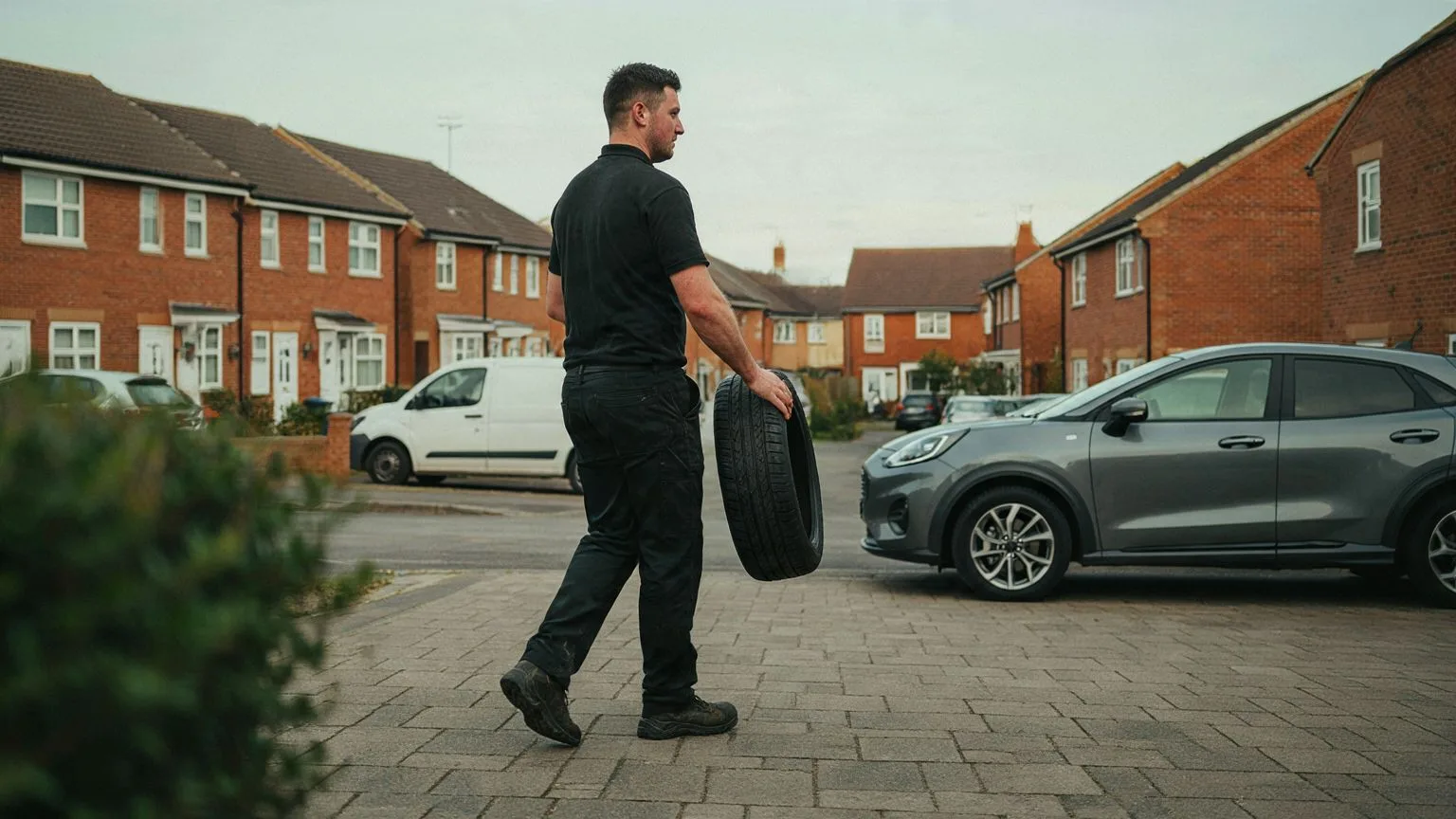
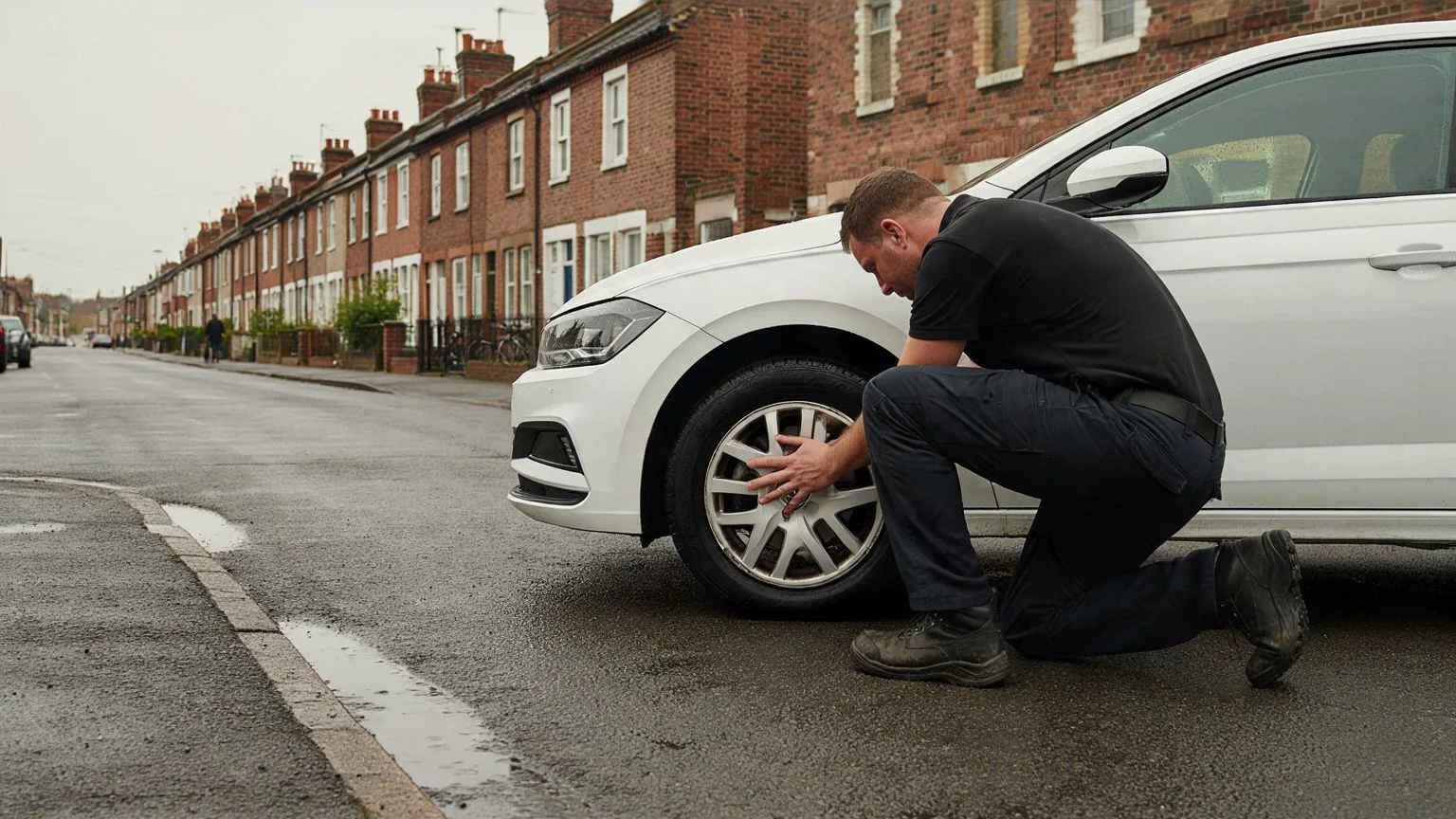
The car is lifted safely and each wheel is moved to its new position.
If any vibration has been reported, or a wheel shows signs of imbalance, we rebalance it.
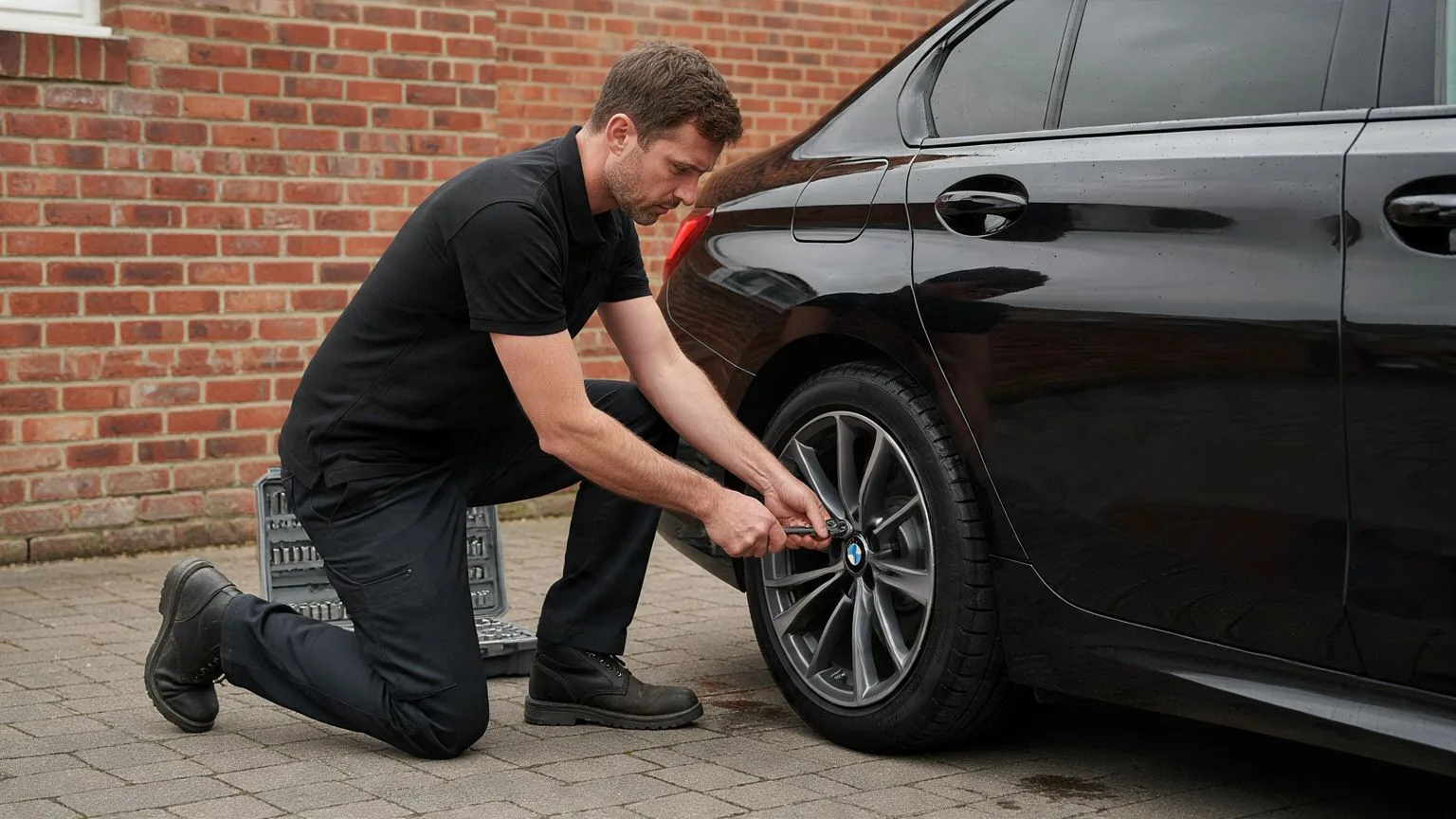
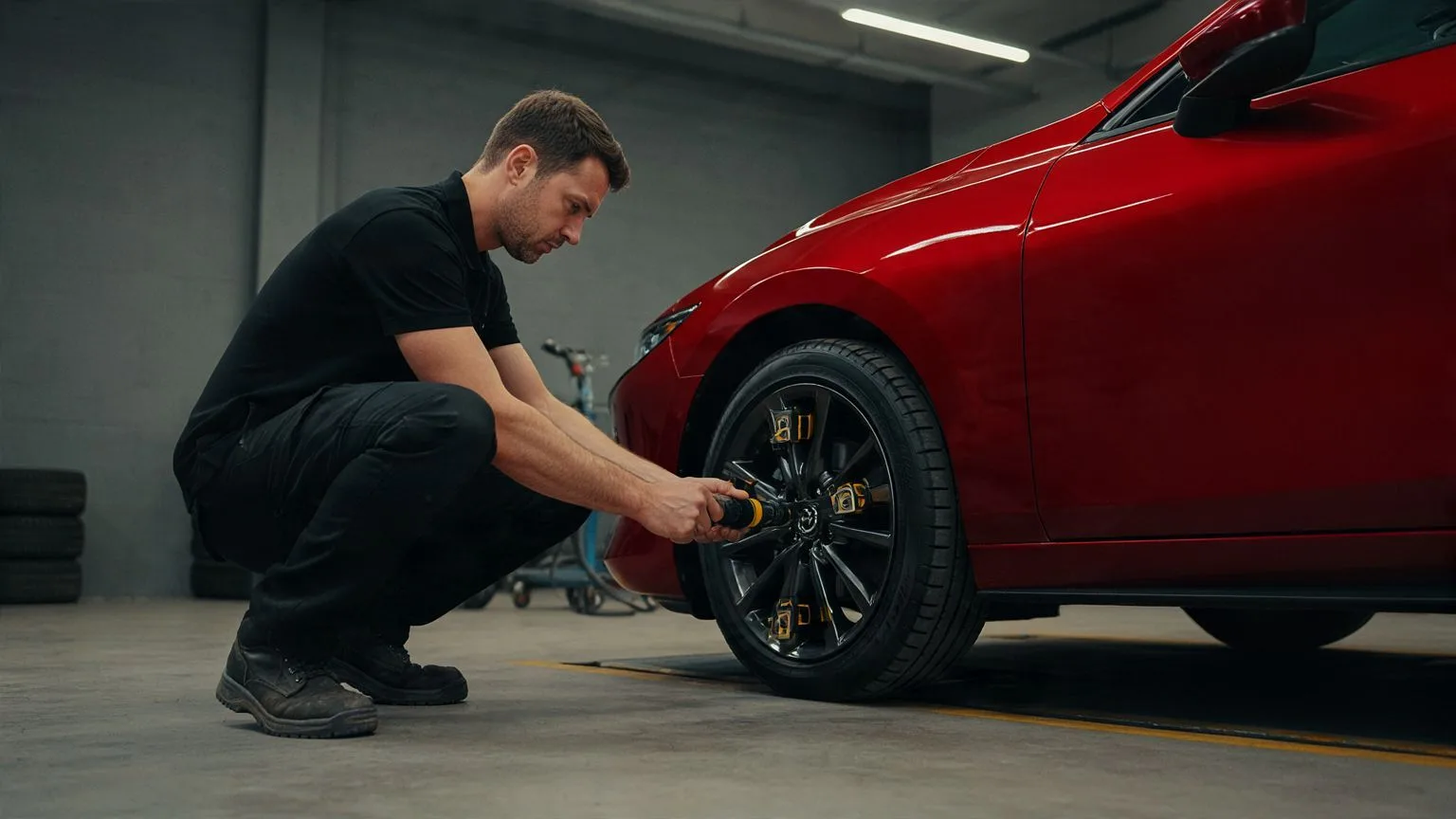
We set every tyre to the correct pressure for its new position and torque the wheel nuts.
We tell you the tread depths, anything we spotted and when your next rotation is due.
If your car has direct TPMS sensors, some models need the sensor positions relearned after rotation. We'll check and reset the system where needed, so you don't get a warning light.
Our Other Tyre Services

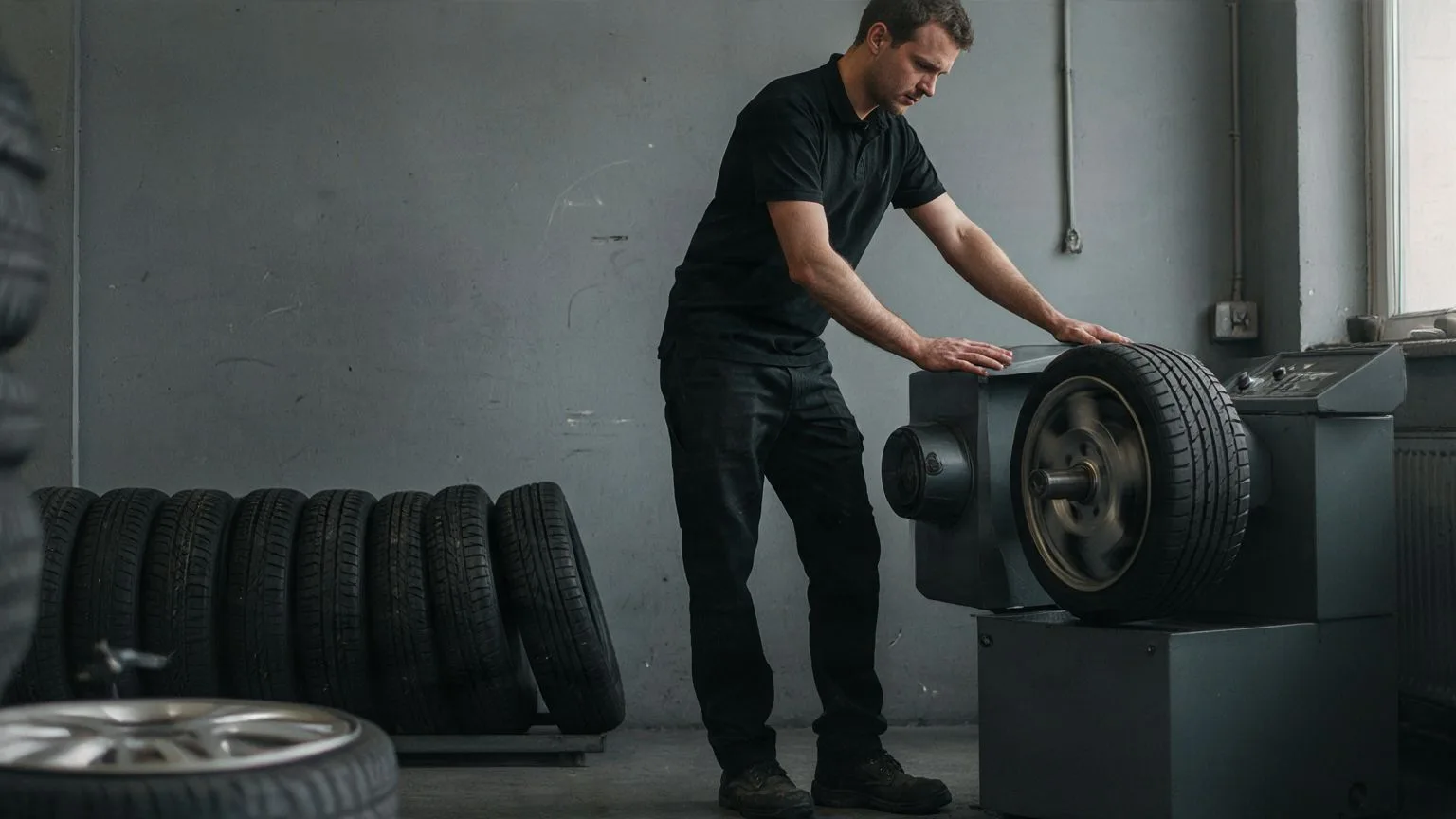
Why Tyres Wear Unevenly
Each tyre on your car carries a different load and does a different job, so they never wear at exactly the same rate. How unevenly they wear depends mostly on which wheels drive the car.
Front-Wheel-Drive Cars
Most cars on UK roads are front-wheel drive. The front tyres steer the car, deliver all the engine's power and handle most of the braking, while carrying the weight of the engine. As a result, front tyres can wear out up to twice as fast as the rears. Without rotation, you end up replacing the fronts again and again while the rears sit there half-used.
Rear-Wheel-Drive Cars
On rear-wheel-drive cars, such as many BMW and Mercedes models, the rear tyres deliver the power and the fronts do the steering. Wear is shared more evenly, but the rears often wear faster in the centre from acceleration, while the fronts wear on the shoulders from cornering. Rotation evens this out.
Four-Wheel and All-Wheel-Drive Cars
4x4 and all-wheel-drive systems send power to all four wheels, but the front tyres still do the steering and carry more weight. On these cars, keeping all four tyres at a similar tread depth is especially important, because big differences can put strain on the drivetrain. Regular rotation is the easiest way to keep them matched.
The Benefits of Rotating Your Tyres
Rotation is one of the simplest, lowest-cost ways to look after your tyres, and the benefits add up over the life of a set:
- check_circleLonger tyre life – spreading wear across all four tyres can add thousands of miles to a set.
- check_circleLower running costs – fewer, less frequent tyre replacements save money.
- check_circleBalanced handling – similar tread front and rear keeps grip consistent, especially in the wet.
- check_circleReplace as a set – when tyres wear evenly, you can replace all four together, keeping the car balanced.
- check_circleEarly problem spotting – regular checks catch alignment issues, damage and slow punctures before they get expensive.
Tyre Rotation Patterns Explained
There’s no single “correct” way to rotate tyres. The right pattern depends on which wheels drive your car and whether your tyres are designed to roll in one direction only. Using the wrong pattern can reduce grip or even be unsafe, which is why we always check before moving anything.
| Pattern | How the tyres move | Best for |
|---|---|---|
| Forward cross | Front tyres move straight back; rear tyres cross to the opposite side at the front | Most front-wheel-drive cars |
| Rearward cross | Rear tyres move straight forward; front tyres cross to the opposite side at the rear | Rear-wheel-drive and many 4x4 cars |
| X-pattern | All four tyres move diagonally to the opposite corner | Some front-wheel-drive and all-wheel-drive cars |
| Front to back, same side | Front and rear swap on the same side only | Directional tyres |
| Side to side | Left and right swap on the same axle | Cars with different front and rear sizes, using non-directional tyres |
Directional Tyres
Directional tyres have a tread pattern designed to roll one way only, shown by an arrow on the sidewall. They clear water very effectively, but they must stay on the same side of the car. That means they can only be rotated front to back, never crossed over, unless they’re removed from the wheel and remounted.
Staggered Tyre Sizes
Some performance cars, including many BMW, Mercedes and Audi models, have wider tyres on the rear than the front. Front and rear tyres can’t swap on these cars, because they’re different sizes. If the tyres are non-directional, they can sometimes be swapped side to side on the same axle; otherwise, regular checks and correct pressures are the best way to manage wear.
Questions about tyre rotation? Call 07761 491 673 and speak straight to the technician.
How Often Should You Rotate Your Tyres?
As a general rule, we recommend rotating your tyres every 6,000 to 8,000 miles. For many drivers, that works out at once or twice a year, and it’s easy to remember if you do it alongside your car’s service. Your car’s handbook may give a specific interval, and if it does, that’s the one to follow.
You may benefit from rotating more often if you drive a powerful front-wheel-drive car, do lots of short stop-start trips around town or regularly tow. A quick look at your tyres is also a good guide: if the front tread is noticeably lower than the rear, it’s time. The key is to start early, from when the tyres are new, so the difference never gets large.
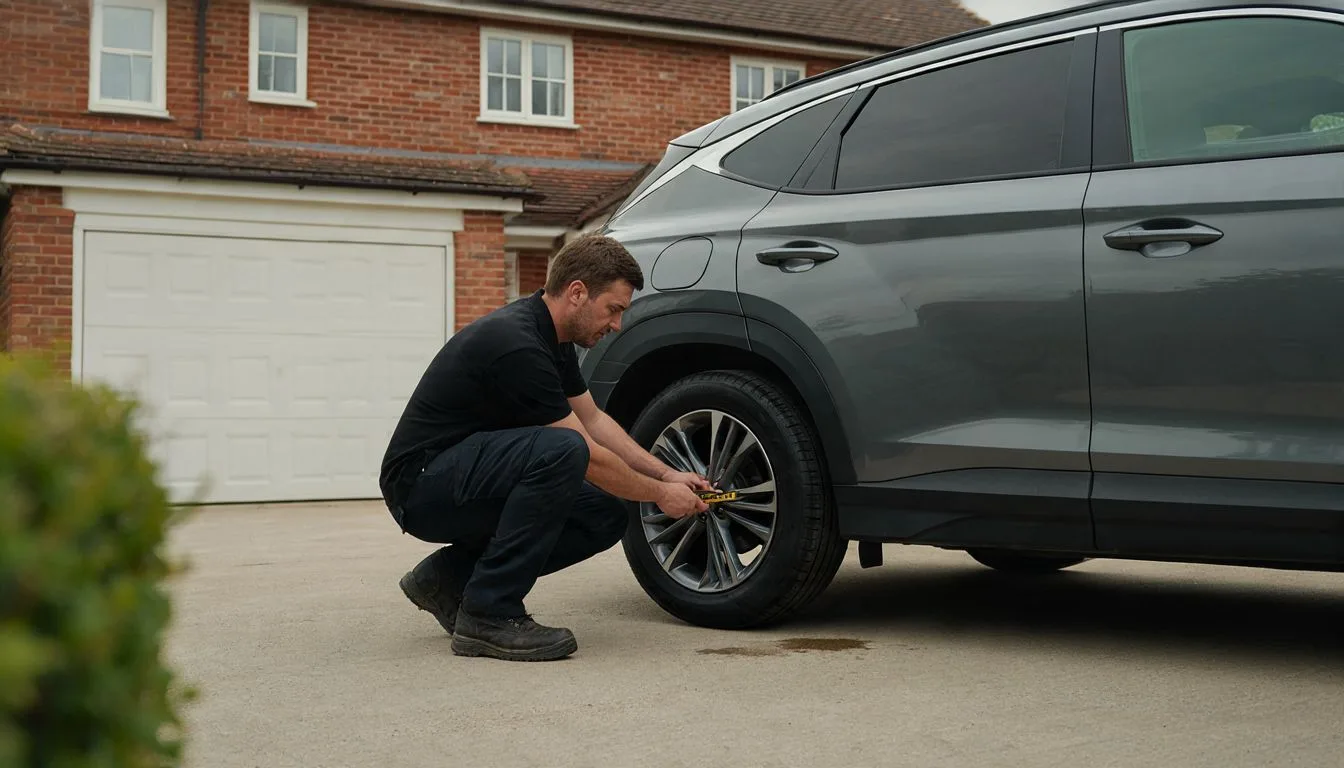
When Rotation Isn't the Right Answer
Rotation works best as regular maintenance. In some situations, moving tyres around won’t help, or isn’t the safest choice, and we’ll always tell you honestly.
Big Differences in Tread Depth
If your front tyres are much more worn than the rears, moving the worn tyres to the back can make the rear of the car less stable in the wet. Tyre safety experts generally recommend that the tyres with the most tread go on the rear axle, to reduce the risk of the back of the car sliding. In this case, replacing the worn pair may be better than rotating.
Tyres Close to the Legal Limit
Rotation can't add tread to a tyre that's already worn out. If any tyre is close to the 1.6mm legal limit, or worn below it on one edge, it needs replacing, not moving. We'll show you the readings and give you a clear price for new tyres.
Uneven Wear Caused by Alignment
If a tyre is wearing heavily on its inside or outside edge, the cause is usually wheel alignment, not position on the car. Rotating will spread that damage to another tyre. The fix is to correct the alignment first, so every tyre wears evenly from then on. See our wheel alignment page.
The Checks We Carry Out During Rotation
With all four wheels coming off, rotation is the perfect time to give your tyres a proper health check. We don’t just swap them and leave; we look at each tyre closely and tell you what we find.
Tread Depth Readings
We measure the tread across each tyre, not just in one spot, to check for even wear. You'll get the readings for all four tyres, so you know how much life is left and roughly when you'll need replacements. It also helps us choose the best position for each tyre.
Damage and Puncture Check
We look for nails, screws, cuts, cracks and sidewall bulges that are easy to miss when the wheel is on the car. A nail found early can often be repaired to BS AU 159 on the spot, saving you from a flat later. Sidewall damage means the tyre should be replaced, and we'll explain why.
Wear Pattern Reading
How a tyre has worn tells us a lot about the car. Edge wear points to alignment, centre wear to over-inflation and patchy wear to balance or suspension issues. We'll flag anything that needs attention so the next set lasts longer.
Pressures and Tyre Age
Many cars use different pressures front and rear, so we set every tyre correctly for its new position. We also check the DOT date code on each tyre, because rubber hardens with age, and tyres over 5 years old deserve a closer look. Your spare wheel can be checked too if you'd like.
Why Choose Quick Fix Tyres for Tyre Rotation
Tyre rotation is a small job, but doing it right makes a real difference to how long your tyres last. Here’s why Bolton and Farnworth drivers trust us with it.
The Right Pattern for Your Car
We check your drive type, tyre sizes and whether your tyres are directional before moving anything. That way, every tyre ends up in the position that's safe and gives the most even wear. We never use a one-size-fits-all swap.
A Full Tyre Check Every Time
Every rotation includes tread readings, a damage check and a wear pattern review on all four tyres. You get a clear picture of your tyres' health, not just a quick swap. If we find a nail or a problem, we'll tell you straight away and fix it with your go-ahead.
Honest Advice, No Upselling
If rotation won't help, because a tyre is too worn or alignment is the real cause, we'll say so. We'd rather give you honest advice than charge for work that doesn't solve the problem. Our Google reviews regularly mention our trustworthy, friendly service.
Convenient and Local
We can rotate your tyres at your home or workplace, or at our workshop at 1 Briarfield Rd, Farnworth. You call the technician directly on 07761 491 673, with no call centre in between. We're open Monday to Saturday, 8:00 AM to 6:00 PM.
Prefer to visit? Our Farnworth workshop is open Monday to Saturday, 8:00 AM to 6:00 PM. Call 07761 491 673 to book.
Book Tyre Rotation Today
Get more miles from your tyres and keep your car handling evenly. Call Quick Fix Tyres on 07761 491 673, message us on WhatsApp or request a free quote online, and we'll rotate your tyres at your home, work or our Farnworth workshop. We're open Monday to Saturday, 8:00 AM to 6:00 PM. The right pattern, a full tyre check and honest advice.
Areas We Cover
Our base is at 1 Briarfield Rd, Farnworth, Bolton BL4 0HD, and our mobile vans offer tyre rotation across Greater Bolton. Typical arrival times are below, though traffic and booked jobs can change them on the day. Call 07761 491 673 to book a time that suits you.
Tyre Rotation FAQs
How much does tyre rotation cost?expand_more
The price depends on your car and whether any wheels need rebalancing. Call 07761 491 673 and we'll give you a clear price before any work starts.
How long does tyre rotation take?expand_more
Around 30 minutes for most cars, a little longer if wheels need rebalancing or the TPMS needs resetting.
How often should I rotate my tyres?expand_more
Every 6,000 to 8,000 miles is a good guide, or at every service. Follow your car handbook if it gives a specific interval.
Can all tyres be rotated?expand_more
Most can. Directional tyres can only move front to back on the same side, and cars with different front and rear tyre sizes may only be able to swap side to side, or not at all. We'll check yours and recommend the best option.
Should new tyres go on the front or the back?expand_more
Generally, the tyres with the most tread should go on the rear axle. This helps keep the back of the car stable in wet conditions, even on front-wheel-drive cars. We'll position your tyres accordingly.
Does tyre rotation affect my TPMS?expand_more
On some cars with direct TPMS sensors, the system needs to relearn where each sensor is after rotation. We check this and reset it where needed, so you don't drive away with a warning light.