
Wheel Alignment & Tracking in Bolton & Farnworth
Is your car drifting to one side, or is the steering wheel off-centre when you drive in a straight line? Are the edges of your tyres wearing out faster than the middle? These are classic signs that your wheel alignment, often called tracking, is out. Quick Fix Tyres offers wheel alignment for drivers across Bolton and Farnworth, setting your wheel angles back to the manufacturer’s specification. Correct alignment protects your tyres, saves fuel and makes your car safer and more relaxing to drive.
This page explains what wheel alignment actually adjusts, how to spot the warning signs, what your tyre wear is telling you and how alignment differs from balancing. To book or get a price, call 07761 491 673.
- check_circleHome, work or roadside
- check_circleFarnworth workshop, Mon–Sat 8–6
- check_circleNo hidden callout charges
What's Included in Our Wheel Alignment Check
A proper wheel alignment is more than turning a couple of adjusters. We check the parts that hold the alignment in place, measure the angles accurately and set them to your car’s exact specification. Here’s what’s included:
| Included as standard | Why it matters |
|---|---|
| Tyre condition and wear check | Your tyre wear pattern shows which angles are out |
| Steering and suspension inspection | Worn track rod ends or bushes stop alignment from holding |
| Accurate measurement of wheel angles | Shows exactly how far each wheel is from specification |
| Adjustment to manufacturer's figures | Every car model has its own correct settings |
| Steering wheel centred | So the wheel sits straight when you drive straight |
| Before and after readings explained | You see what was wrong and what we corrected |
Prices depend on your car and whether front-only or four-wheel alignment is needed. Call 07761 491 673 with your registration and we'll give you a clear price before any work starts.
How We Align Your Wheels
We follow the same careful process on every car, so the result is accurate and lasts. Most alignments take 30 to 45 minutes.
Call 07761 491 673 or request a quote. We'll confirm the price and whether the work is done at your location or at our Farnworth workshop.
We check tyre pressures and look at the tyre wear pattern, which tells us which angles are likely to be out.
We check track rod ends, ball joints and bushes. If something's worn, we tell you before adjusting, because alignment won't hold on worn parts.
Using alignment equipment, we measure toe and, where adjustable, camber on each wheel.
We set the angles to your car manufacturer's figures and centre the steering wheel.
We re-measure to confirm the readings, then road test where needed to make sure the car drives straight.
At the end, we show you the before and after readings in plain English, so you know exactly what was done.
Our Other Tyre Services
Toe, Camber and Caster Explained
Wheel alignment isn’t about the wheels themselves. It’s about the angles at which they meet the road. There are three main angles, and each one affects your car in a different way.
| Angle | What it is | If it's wrong |
|---|---|---|
| Toe | Whether the front of the wheels point slightly inwards or outwards when viewed from above | Fast, feathered wear across the tread and a car that wanders or pulls |
| Camber | Whether the top of the wheel tilts in towards the car or out away from it, viewed from the front | Wear on one edge of the tyre, inside or outside |
| Caster | The forward or backward tilt of the steering pivot, viewed from the side | Heavy or light steering, poor straight-line stability, pulling |
Toe: The Most Common Problem
Toe is the angle that goes out most often, and it’s the one most cars can adjust easily. Even a small toe error makes the tyres scrub sideways slightly as they roll, which wears them quickly and can make the car feel nervous on the motorway. When most people talk about “tracking”, toe is what they mean.
Camber and Caster
Camber and caster are set by the suspension design, and on many cars they’re only adjustable on certain models or with extra parts. If they’re out of specification, it usually means a bent or worn suspension component after an impact. We’ll measure them, explain what we find and tell you whether a repair is needed before alignment can be set properly.
Questions about wheel alignment & tracking? Call 07761 491 673 and speak straight to the technician.
Signs Your Wheel Alignment Is Out
Alignment problems often start small and get worse slowly, so many drivers get used to them without noticing. Meanwhile, every mile wears your tyres a little faster. Look out for these signs:
- check_circleThe car pulls or drifts to one side on a straight, flat road
- check_circleThe steering wheel is off-centre when you're driving in a straight line
- check_circleTyres wear on the inside or outside edge much faster than the centre
- check_circleTyres squeal on gentle bends or roundabouts at normal speeds
- check_circleThe steering feels vague or heavy, or doesn't return to centre after a turn
- check_circleYou've recently hit a kerb or pothole hard, even if nothing feels obviously wrong
A quick test: on a straight, quiet road, loosen your grip on the wheel for a moment. If the car consistently drifts the same way, get the alignment checked. Bear in mind that a slight drift towards the kerb can be caused by the camber of the road surface, which is why a proper measurement matters.
What Knocks Your Tracking Out?
Your car leaves the factory with its wheels correctly aligned, but everyday driving gradually pushes the angles out. These are the most common causes we see around Bolton and Farnworth:
Potholes and Speed Bumps
A hard hit on a pothole sends a big shock through the wheel into the steering and suspension. That's often enough to move the tracking or bend a component. Speed bumps taken too fast and deep drain covers have the same effect over time.
Kerbs
Clipping a kerb while parking, or sliding into one in the wet, is one of the quickest ways to knock alignment out. If you've scuffed an alloy on a kerb, there's a good chance the tracking has moved too.
Worn Steering and Suspension Parts
Track rod ends, ball joints and suspension bushes wear naturally with mileage. As they loosen, the wheel angles shift and won't stay where they're set. Replacing worn parts and then aligning the wheels is the only lasting fix.
Suspension Repairs or Modifications
New springs, shock absorbers, track rods or lowered suspension all change the geometry. Alignment should always be checked after any steering or suspension work, even if the car feels fine.
What Your Tyre Wear Is Telling You
Your tyres are the best record of how your wheels have been sitting on the road. Before we adjust anything, we read the wear pattern, because it points straight to the cause. You can check yours too by running your hand across the tread.
| Wear pattern | Likely cause |
|---|---|
| Inside edge worn | Too much negative camber or toe-out |
| Outside edge worn | Positive camber or too much toe-in |
| Feathered edges (smooth one way, sharp the other) | Toe out of specification |
| Both edges worn, centre fine | Tyre run under-inflated |
| Centre worn, edges fine | Tyre run over-inflated |
| Patchy, scalloped dips | Wheel out of balance or worn shock absorbers |
If your tyres are already worn unevenly, alignment won’t restore the lost tread, but it will stop the problem getting worse and protect the next set. That’s why we always recommend checking alignment when you fit new tyres after uneven wear.
Front Wheel vs Four-Wheel Alignment
Many older and smaller cars only have adjustable toe on the front wheels, so a front wheel alignment is all they need. Most modern cars, though, have independent rear suspension where the rear wheels have their own angles too. If the rear wheels point slightly off-line, the car can “crab” down the road, and even a perfect front setting won’t make the steering sit straight.
Four-wheel alignment measures all four wheels against the car’s centre line and sets the rear first, then the front to match. It’s the most accurate approach and the best choice for cars with adjustable rear suspension, 4x4s and performance cars. We’ll tell you which your car needs when you book.
Prefer to visit? Our Farnworth workshop is open Monday to Saturday, 8:00 AM to 6:00 PM. Call 07761 491 673 to book.
Alignment, Driver Assistance Cameras and Modern Cars
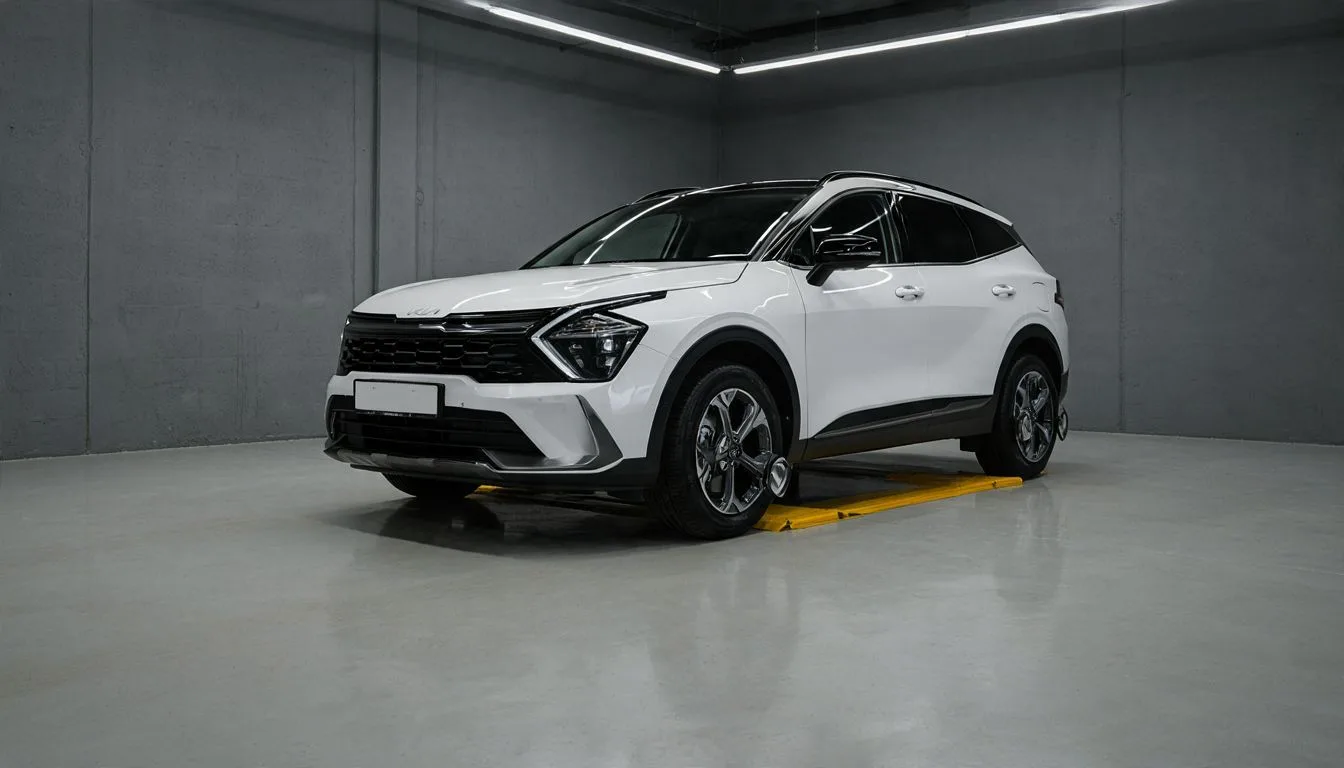
Many newer cars use cameras and radar for lane keeping, lane departure warnings and adaptive cruise control. These systems work out where “straight ahead” is from the car’s thrust line and steering angle sensor. After a wheel alignment, some models need their steering angle sensor reset or their driver assistance cameras recalibrated, so the systems behave correctly.
If your car has these features, mention it when you book. We'll check the manufacturer's requirements and tell you honestly whether a further calibration is needed and where it can be done.

Wheel Alignment vs Wheel Balancing
Alignment and balancing are often mentioned together, and both help your tyres last longer, but they fix completely different problems. Knowing the difference helps you ask for the right service.
| Wheel alignment | Wheel balancing | |
|---|---|---|
| What it adjusts | The angles of the wheels relative to the car and the road | The weight distribution around each wheel and tyre |
| Main symptom it fixes | Car pulling to one side, off-centre steering wheel | Vibration through the steering wheel or seat at speed |
| Effect on tyres | Stops edge wear and feathering | Stops patchy, scalloped wear |
| When to do it | After impacts, suspension work, or when wear is uneven | Whenever tyres are fitted or repaired, or vibration appears |
Many cars benefit from both at the same time, especially after new tyres or a heavy pothole strike. See our wheel balancing page for more.
The Benefits of Correct Alignment
Getting your alignment right is one of the simplest ways to cut your motoring costs. Tyres last longer because they wear evenly across the whole tread, rather than one edge going bald early. Fuel economy improves because the tyres roll freely instead of scrubbing sideways. The car also handles more predictably, brakes in a straighter line and is far more relaxing to drive on long motorway journeys.
Why Choose Quick Fix Tyres for Wheel Alignment
Wheel alignment is a precision job, and the difference between a good and a rushed one shows up in your tyres months later. Here’s why Bolton and Farnworth drivers book with us.
We Check Before We Adjust
We inspect your steering and suspension parts before touching the alignment. If a track rod end or bush is worn, we tell you first, because aligning wheels on worn parts is wasted money. You only pay for work that will actually fix the problem.
Set to Your Manufacturer's Figures
Every car model has its own correct alignment settings. We adjust to your manufacturer's specification, not a rough guess, and centre your steering wheel so it sits straight. You see the before and after readings, so you know exactly what changed.
Honest, Tyre-Focused Advice
As tyre specialists, we see the damage poor alignment does every day. We'll read your tyre wear, explain what it means and recommend alignment only when it will genuinely help. If your tyres are fine and the car drives straight, we'll tell you that too.
Local, Easy to Reach
We're a local, independent team based at 1 Briarfield Rd, Farnworth. When you call 07761 491 673, you talk directly to the technician, not a call centre. We're open Monday to Saturday, 8:00 AM to 6:00 PM, and our Google reviews regularly mention our professional, friendly service.
Book Your Wheel Alignment Today
Stop uneven tyre wear and steering pull before they cost you a new set of tyres. Call Quick Fix Tyres on 07761 491 673, message us on WhatsApp or request a free quote online. We're open Monday to Saturday, 8:00 AM to 6:00 PM. Accurate alignment, honest advice and a clear price before we start.
Areas We Cover
Our base is at 1 Briarfield Rd, Farnworth, Bolton BL4 0HD, close to the A666 and junction 3 of the M61. We provide wheel alignment for drivers across Bolton, Farnworth, Kearsley, Little Lever, Walkden, Westhoughton, Horwich, Wigan and Chorley. Call 07761 491 673 to book a time that suits you, and we’ll confirm where the work will be carried out.
Wheel Alignment FAQs
How much does wheel alignment cost in Bolton?expand_more
The price depends on your car and whether it needs front-only or four-wheel alignment. Call 07761 491 673 with your registration and we'll give you a clear, fixed price before any work starts.
How long does wheel tracking take?expand_more
Around 30 to 45 minutes for most cars. Four-wheel alignment or cars with seized adjusters can take a little longer, and we'll tell you if that's likely.
How often should I get my wheel alignment checked?expand_more
We recommend a check every 12 months or 10,000 miles. You should also have it checked after fitting new tyres, after any steering or suspension work, and after hitting a kerb or pothole hard.
Will alignment fix my steering wheel vibration?expand_more
Usually not. Vibration at speed is normally caused by wheels being out of balance, while alignment fixes pulling and uneven edge wear. We'll check both and tell you which your car needs.
Can bad alignment cause an MOT failure?expand_more
Poor alignment itself isn't tested directly, but the problems it causes can be. Tyres worn below 1.6mm on one edge, or worn steering parts that stop alignment holding, are common MOT failures.
My car still pulls after an alignment. Why?expand_more
A pull can also come from a tyre with an internal fault, uneven tyre pressures, a sticking brake or the slope of the road. If your car still pulls, we'll check these causes too and tell you what we find.